HoneyBook vs ThriveOS — which one actually gets staging done?
HoneyBook is a beautiful platform. Millions of creatives love it. But it was built for photographers and wedding planners — not for someone coordinating a Tuesday install at three different properties. Let's talk about what that means for you.

The honest take
HoneyBook helps you book the client. ThriveOS helps you deliver the project.
Everything after the handshake
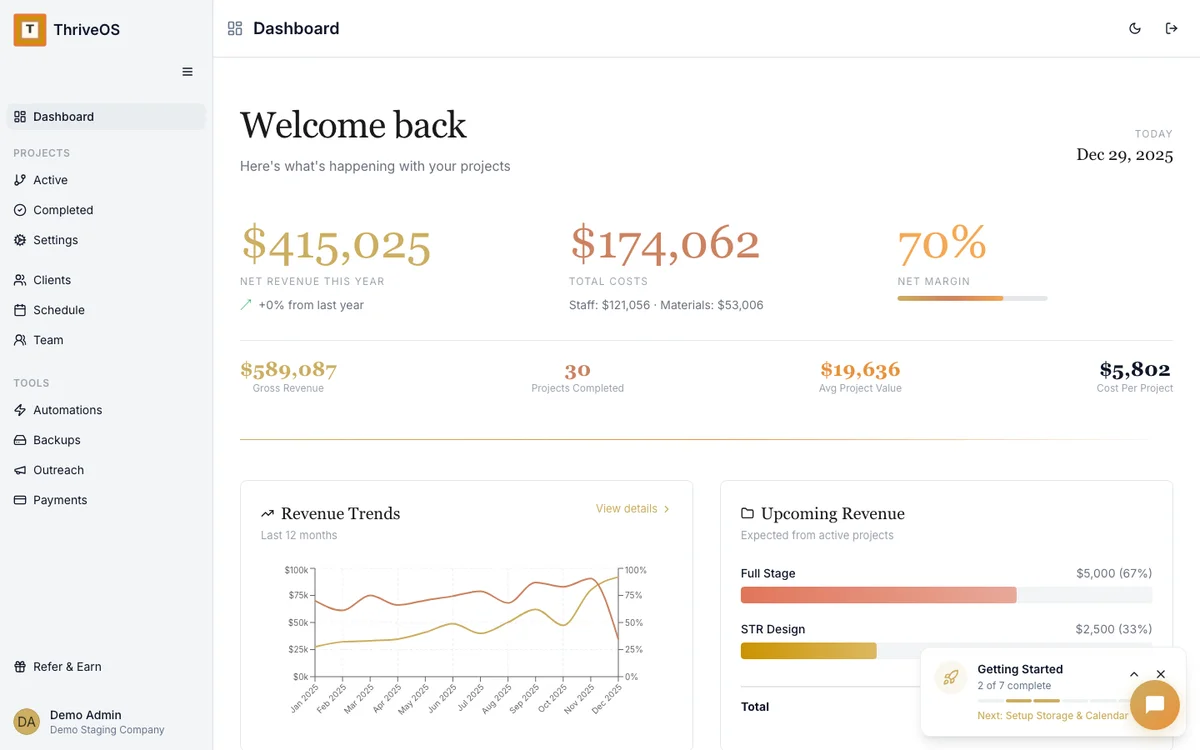
ThriveOS was built around what happens after someone says yes — the scheduling, the install coordination, the invoicing tied to what actually got done, the team assignments. It's a project delivery system that also does CRM, not the other way around.
If your bottleneck is getting the work out the door (not getting the lead in the door), this is the difference that matters.
The booking experience is polished
HoneyBook has had years to perfect the inquiry-to-booking flow. Their proposals are gorgeous, their templates are plentiful, and they've built smart AI tools that help you respond to leads faster. The client-facing experience is genuinely impressive.
If your business lives and dies by how quickly you can turn an inquiry into a signed contract, HoneyBook does that well.
Let's talk about what you're actually paying
HoneyBook raised their prices significantly in early 2025. Here's where things stand now — no tricks, no annual-only pricing games.
 ThriveOS
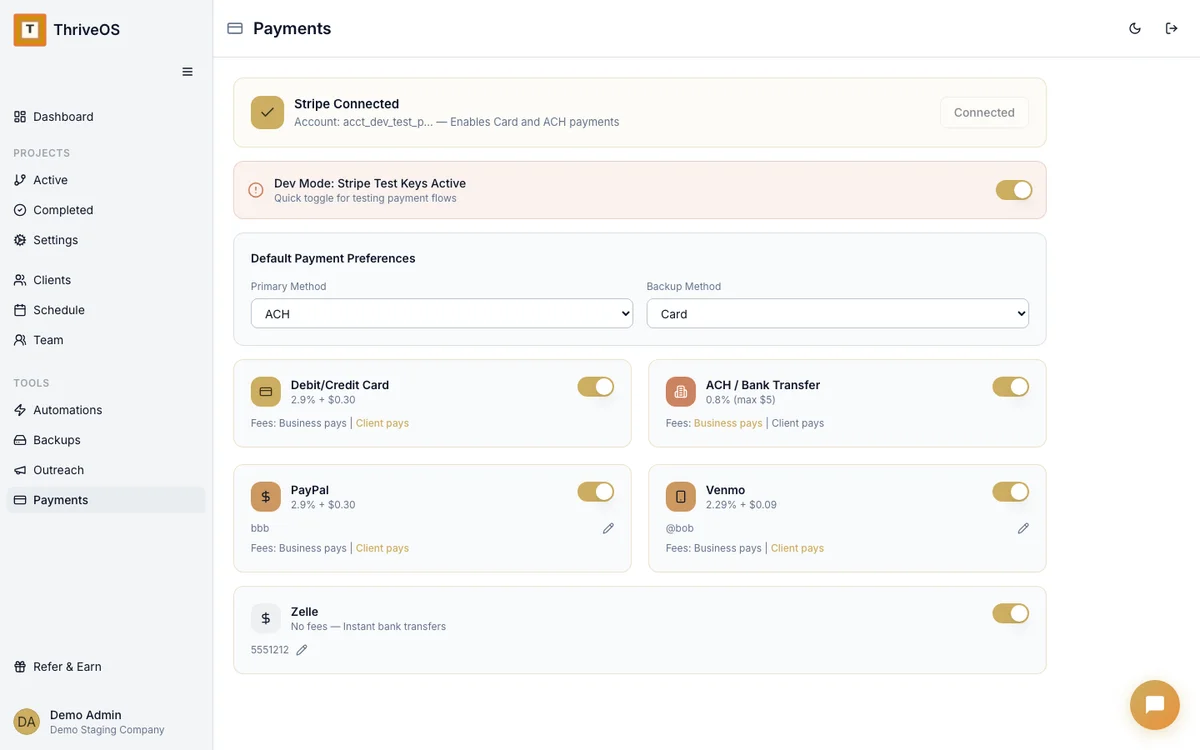
Annual options: $200/yr and $400/yr. Payment processing: 2.9% + $0.30 cards, 0.8% ACH (capped at $5).
Annual options: $29, $49, $109/mo. Processing: 2.9% + $0.25 cards, 1.5% ACH. US & Canada only.
Your project pipeline should look like your actual week
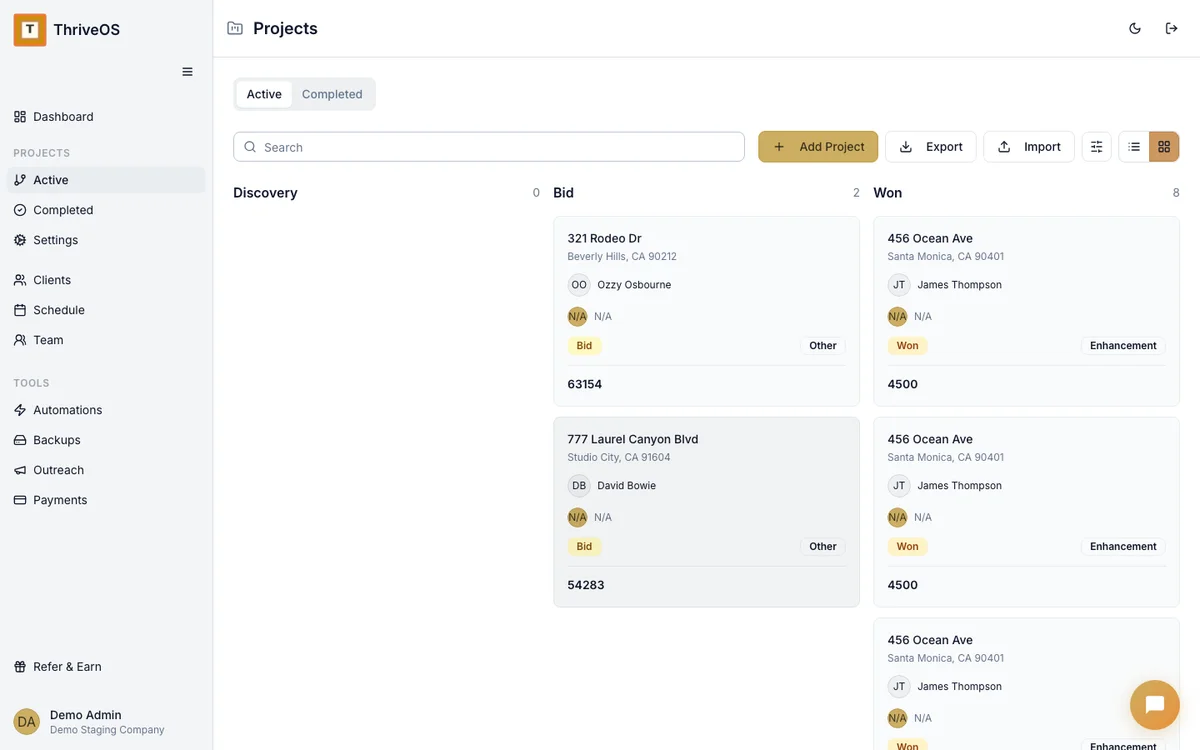
In HoneyBook, a "project" is mostly a folder for files and conversations. In ThriveOS, a project tracks the full lifecycle — from proposal to install to destage — with phases, team assignments, and financial visibility at every step.
When you open your dashboard on Monday morning, you should see what's happening this week across every property. Not just what's in your inbox.
Contracts that move the project forward — not just sit in a folder
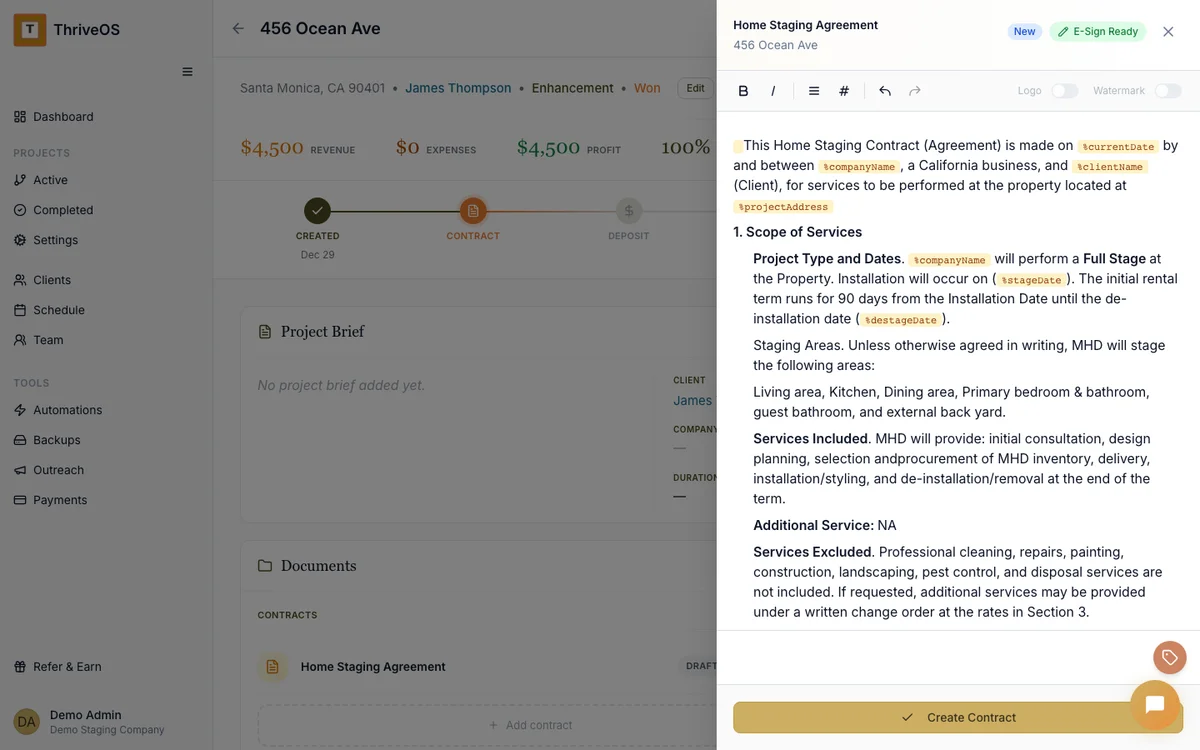
Both platforms do e-sign. But in ThriveOS, a signed contract isn't just a PDF in a drawer — it advances the project to the next phase. The deposit invoice can go out automatically. Your team gets notified. The calendar updates.
In HoneyBook, the contract is a step in your booking flow. In ThriveOS, it's a trigger in your delivery flow. Same document, very different role.
ACH fees that don't quietly eat your margins
On a $4,000 staging invoice paid by bank transfer, HoneyBook takes $60 in ACH fees (1.5%). ThriveOS caps that at $5. That's $55 back in your pocket — per invoice.
On cards, the rates are similar (around 2.9%). But if your clients prefer bank transfers — and on bigger invoices, they often do — the difference adds up fast.

You don't just book clients. You transform homes.
HoneyBook was designed for people whose work happens in a conversation — coaches, consultants, photographers at a shoot. Beautiful tools for that.
But your work happens across properties, across days, across a team with a van full of furniture. You need a system that understands what "install day" means, what "destage" means, and what happens when a listing sells early.
That's a different kind of tool. That's what we built.
Honestly? They're both good. Just for different things.
ThriveOS is your match if…
You're managing active installs across multiple properties and need your schedule, billing, and team assignments in one place.
You want invoicing that's tied to what actually happened on the project — not a separate billing system you have to keep in sync.
You're price-conscious and want to start free, then grow into $20/mo when it makes sense. No pressure, no 7-day trial countdown.
HoneyBook might be better if…
Your biggest challenge is converting inquiries into booked clients, and you want a polished, template-rich booking flow to make that happen.
You're a solo operator who doesn't manage team members or coordinate multi-day installs — your work is more consultation-based.
You need a mature mobile app and QuickBooks integration today. HoneyBook has had years to build that out.
Switching doesn't have to be dramatic
You don't have to migrate everything at once. Most stagers start with one or two active projects and go from there.
Create your account (free) and set up your company profile.
Add your current projects and team members.
Send your first invoice through ThriveOS. See how it feels.
If it's working, bring everything over. If not, no hard feelings.